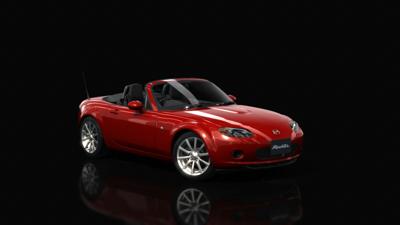
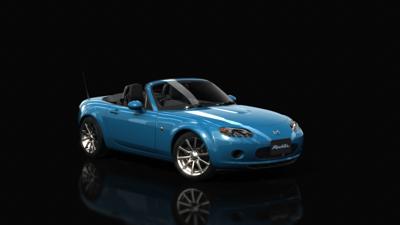
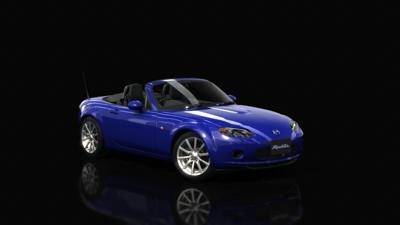
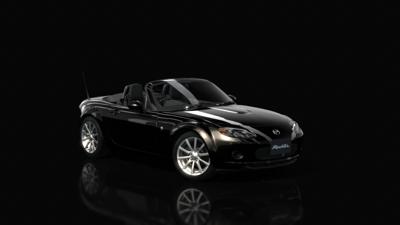
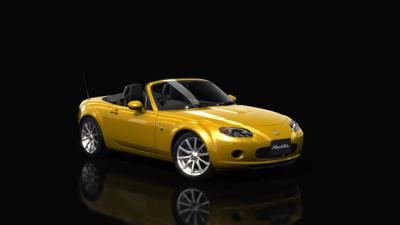
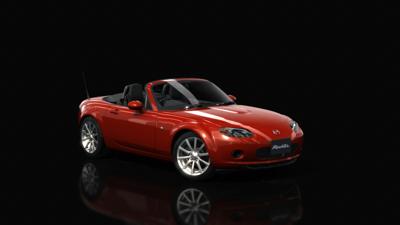
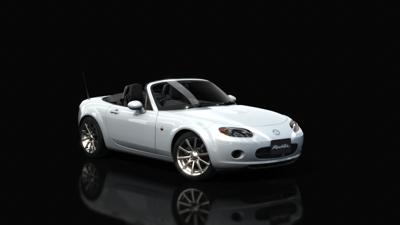
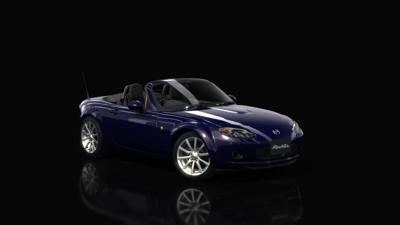
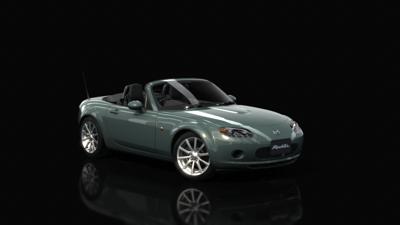
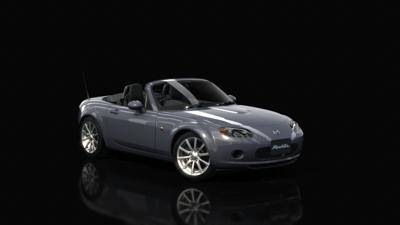
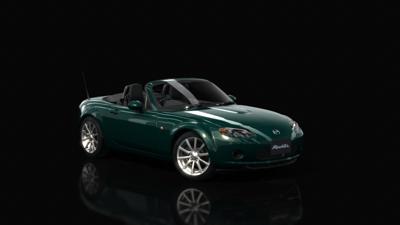
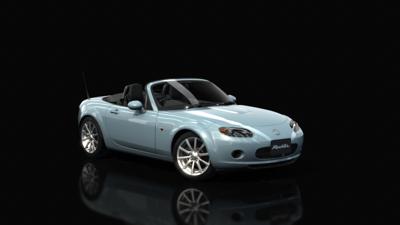
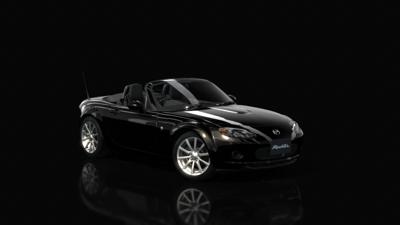
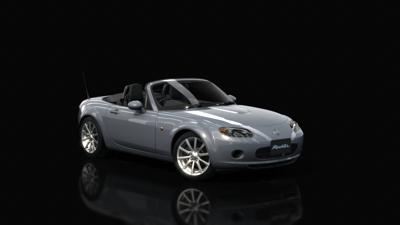
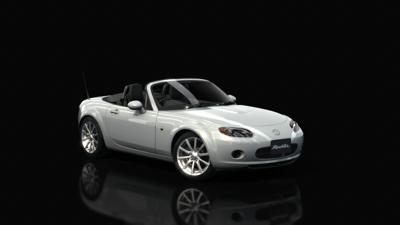
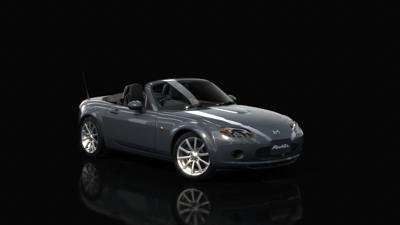
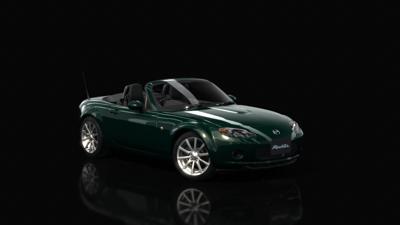
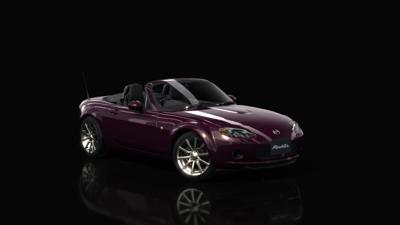
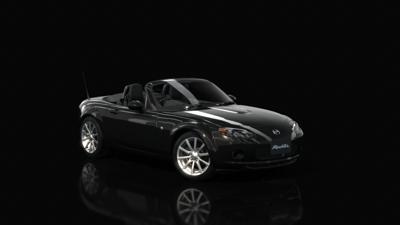
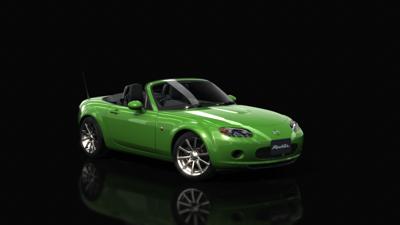
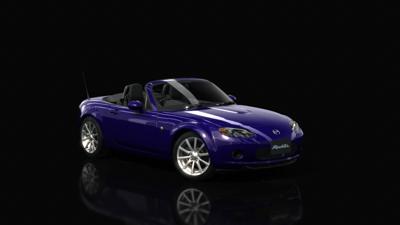
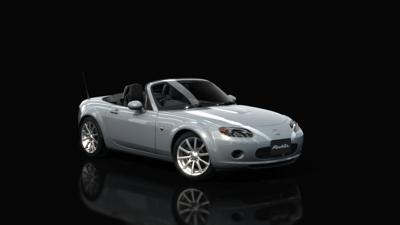
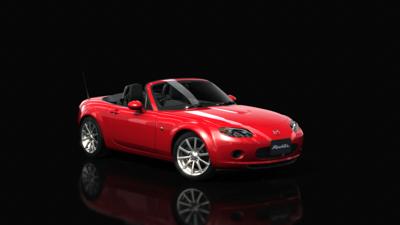
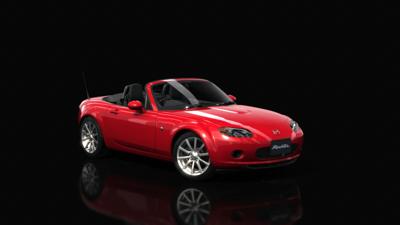
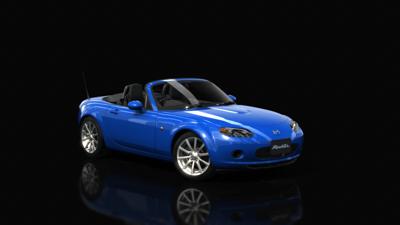
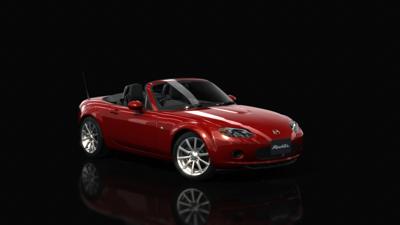
The exterior styling by Yasushi Nakamuta resembled the original design, but unlike the update from NA to NB, which was mostly a nose/tail/interior change, the NC shares no components with the NB, except for the fender-mounted turn signal lights on non-U.S. models, and rear differential internals. The chief designer of this model generation was Moray Callum. The 2003 Mazda Ibuki concept served as a preview of the new model. The suspension changed from a four-wheel double wishbone setup to a front wishbone/rear multilink setup, shared with the Mazda RX-8. Technologies including traction control and stability control were added to increase driveability. According to Car and Driver, the NC has a skidpad number of 0.90g.
For the U.S., the engine was the 16-valve, 2.0 L (120 cu in) MZR LF-VE DOHC I4, producing 130 kW (170 bhp) and 190 N⋅m (140 lbf⋅ft) of torque coupled to either a 5-speed or a 6-speed manual transmission or 118 kW (158 bhp) with the optional 6-speed automatic transmission. A limited-slip differential was available with the 6-speed manual option. In Australia, the 2.0 L (120 cu in) MZR was offered, rated at 118 kW (158 bhp) and 188 N⋅m (139 lbf⋅ft) of torque and the 6-speed manual transmission and LSD are standard. In Europe, two engines were offered: the 2.0 L (120 cu in) MZR LF-VE rated at 118 kW (158 bhp) and 188 N⋅m (139 lbf⋅ft) of torque, coupled to the 6-speed manual transmission; and a new 1.8 L (110 cu in) MZR L8-VE, rated at 94 kW (126 bhp) and 167 N⋅m (123 lbf⋅ft), coupled to the 5-speed manual transmission.
A six-speed automatic transmission, with steering wheel mounted paddle shifters, was optional. A test by Car and Driver magazine revealed a 0-97 km/h (60 mph) time of 6.5 s for the 2.0 L (120 cu in) U.S.-spec NC. Manufacturer figures for the European-spec model are: 0-100 km/h (62 mph) in 9.4 s for the 1.8 and 7.9 s for the 2.0. As of this generation, the car no longer complies with Japanese law's maximum exterior width dimension for the mid-size vehicle tax class, making Japanese buyers liable for additional costs for ownership.


