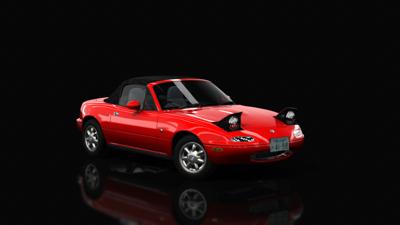
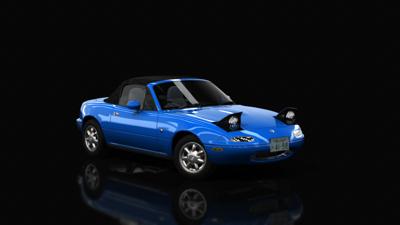
An incredibly popular model that triggered a compact sportscar trend around the world.
*The Eunos Roadster was sold as the Mazda MX-5 in Europe and as Mazda MX-5 Miata in the US.
The Eunos Roadster was the car that revived the lightweight sportscar category at the end of the 20th century. With a lightweight, compact body, a 1.6 L straight-4 DOHC engine, and a rear drive layout, it was a very traditional, lightweight 2-seater cabriolet.
The Japanese release was in September 1989. Initially the engine was the 1.6 L, B6ZE, producing 118.3 BHP and 14.0 kgfm of torque. An aluminium powerplant frame connected the transmission and the rear differential, successfully creating a direct and rigid shift feel. A newly developed double wishbone suspension was used all around with four-wheel disc brakes, and it is said that everything relating to driving on this car was designed with a total disregard for cost. This is probably why driving the Eunos Roadster is often compared to the exhilarating feel of riding a horse, even more so because it is a cabriolet. The fundamental pleasure and the ability to control this car to your will captured the hearts of both new and veteran drivers everywhere.
In August 1993, some minor changes were implemented and a new 1.8 L DOHC, BP-ZE engine was introduced, raising the power to 128.2 BHP and 16.0 kgfm of torque.
In the 2nd minor change of August 1995, the final gear ratio and flywheel were modified, evolving towards the 1800 Series 2.
Many limited edition models were produced for the Eunos Roadster, and with Mazda having produced 531,890 units through to the end of 1997, this model set the world record for production of a 2-seater cabriolet and is even registered in the Guinness Book of World Records.


