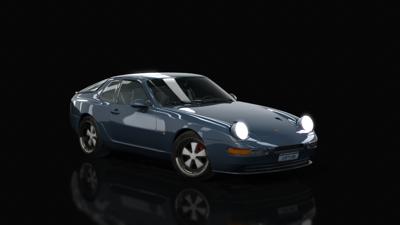
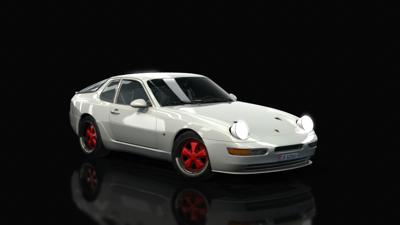
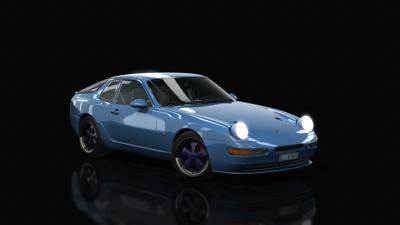
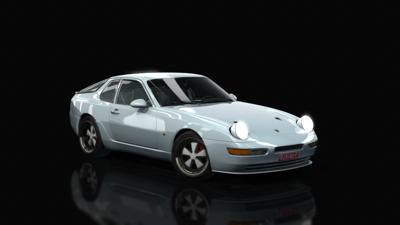
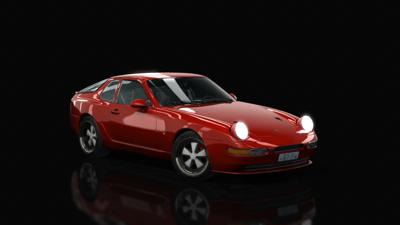
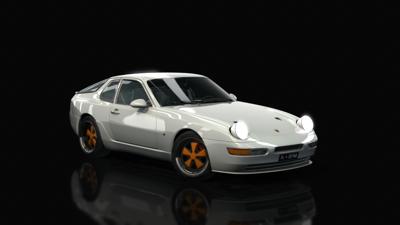
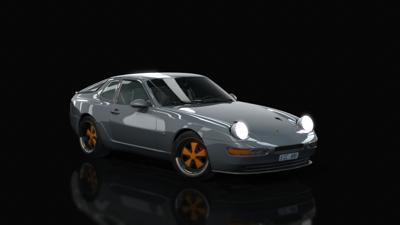
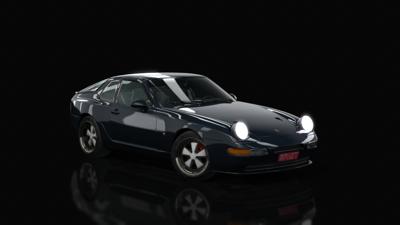
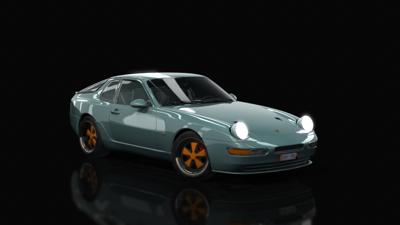
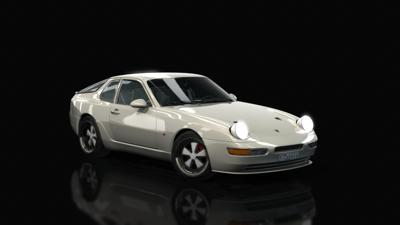
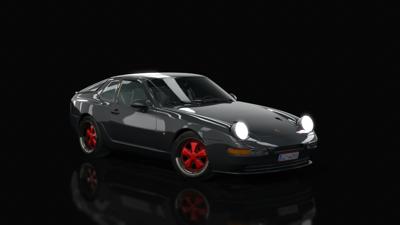
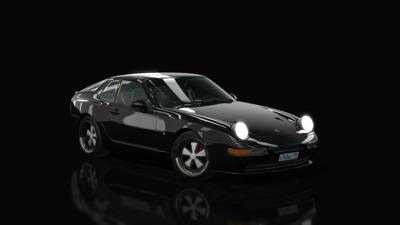
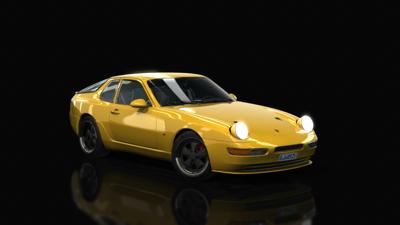
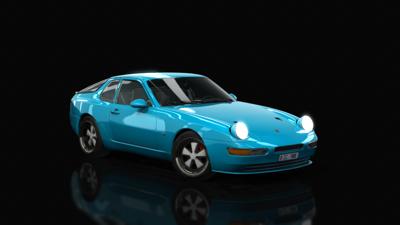
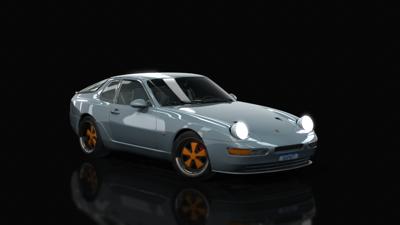
The Porsche 968 Turbo S is the top version of the Porsche 968 sports coupe, which was produced from 1991 to 1995. This car is the latest member of the Porsche family of front-engined sports cars, launched in 1976 with the 924 and continued in 1982-1991 with the 944 and 928.
The emergence of the model was prompted by Porsche's desire to find a way out of the difficult situation in which the company found itself in the late 1980s. The economic crisis of 1987 forced to abandon the mass model 944, and sales of the more prestigious and expensive 928 could not support the enterprise; in fact, only the iconic 911 provided the firm. The management of the concern rightly believed that it would be too risky to associate all its success with one single model. On the other hand, in the autoport, the successes in which have repeatedly saved the company, neither Formula 1 nor Indy Cars projects were famous. Porsche needed to launch a new model on the market as soon as possible, which would be popular with buyers, but in no way would damage the company's reputation. However, there was no money left to develop a completely new model in Stuttgart.
Ultimately, the firm decided to compromise: Paul Hensler, head of the plant's engineering department, called this approach "evolution instead of revolution." It was based on the Porsche 944 model; initially the project was called "944 S3", but in the process of work the engineers replaced or modified about 80% of the parts and assemblies of the original, and the resulting car had little in common with its predecessor. Thus, the Porsche management got every reason to present the S3 modification as a new model, which received the factory index 968.
The new car made its debut in Frankfurt in 1991. The body was worked on by the Dutchman Harm Lagay, one of the designers of the Porsche 924, who by that time became the head of the design center; thanks to him, the new car combined both the features of the 924/944 line and the more prestigious "older" models - the 928 GTS and, in part, the 911 (993). Technically, the 968 represented the final stage in Porsche's four-cylinder monoblock transmissions; from its predecessors, the Transaxle layout was inherited, with a monocoque body and independent suspension, as well as interior and trunk equipment, similar to the later models of the 944 series.
As for the engine, the Porsche 968 was equipped with an in-line 4-cylinder 16-valve liquid-cooled engine with a volume of 2990 cc and a power of 240 hp, with electronic fuel injection. The main innovation was the VarioCam valve timing system, which provided more economical torque in the lower speed range without loss of power. In addition, the car also received two new transmissions offered to choose from: a 6-speed manual and a 4-speed Tiptronic automatic.
Formally, the new car was considered the youngest Porsche model, occupying the niche of entry-level sports cars in the model range. However, unlike its predecessors, the appearance of the 968 was quite modern and sleek, and the interior was more luxurious, with solid equipment and a functional device. The production of the model was transferred from Audi's factories in Neckarsulm (the traditional assembly site of the 924th and 944th models, under a contract with Porsche) to the firm's own plant in Stuttgart, Zuffenhausen district.
The first addition to the basic two-door coupe of the Porsche 968 is the convertible, which has become a highly sought after option on the market. However, the special "charged" modifications received a really enthusiastic response: the 968 Clubsport and 968 Turbo S, which were produced by the Porsche Motorsports division in 1993-1994. The Clubsport, released in a series of 1,538 units, did not technically differ from the base 968, but weighed 100 kg less due to the simplified finish, less sound insulation, Recaro seats with manual adjustment and the absence of "civilian" equipment (rear seats, power windows, air conditioning and a stereo system ). The Porsche 968 Turbo S also had a lighter interior, but in addition to that, it was powered by a 3.0-liter 8-valve SOHC turbocharged 4-cylinder engine producing 305 hp, which was completed exclusively with 6-speed manual transmission. In terms of speed characteristics - acceleration to 100 km / h in 4.7 seconds and a maximum speed of 282 km / h - this model can compete with a much more modern modification of the Porsche flagship - the 911 (996) model, produced in 1998-2005. Turbo S was released in an extremely limited edition (according to the official version, in the amount of 16 copies, according to the unofficial version - 13) and was sold exclusively in continental Europe. In addition to them, the 968 line includes the Sport model, released in 306 copies specifically for the British market - based on the Clubsport, but with a more comfortable interior and simplified electronics, due to which it cost significantly less than the standard 968; and 4 Turbo RS, which were homologated racing cars with the corresponding specifications (337 hp for the German ADAC GT Cup racing league and 350 hp for the Le Mans GT series).
Like the famous 911 Carrera CS and S4 CS models, the charged modifications of the 968 were designed primarily for fans who valued dynamics more than comfort. In this respect, they fully deserved the admiration with which the publications Auto Bild and Auto und Motor Sport wrote about them in 1993, who took the model for a test drive, and the world rally champion Walter Röhrl, who in 1992 experienced on the track The 968 Clubsport, described by Auto Zeitung magazine as the best handling Porsche has ever made.
Overall, however, 968 sales never reached the level initially expected by the firm's management. The build quality of the car clearly did not correspond to the level of the branded sports coupe: for example, it concerned the gaps between body parts. But the main drawback was that the model was inherently much older than it looked outwardly - the design in many details was from the 1970s. Total from 1991 to 1995 12,776 Porsche 968 units were sold (5,731 coupes and 3,959 convertibles, the rest were special editions), after which the company discontinued the model as part of a return to basics program that included the launch of the Porsche Boxster central motor roadster.
The Porsche 968 is the last member of the German firm's front-engined sports car family; in addition, for many years it became the brand's last front-engined car (before the Cayenne crossover) and the last four-cylinder Porsche (before the Macan).
=====================================================
Porsche 968 Turbo S — топ-версия спортивного купе Porsche 968, которое выпускалось с 1991 по 1995 годы. Данный автомобиль является последним представителем семейства переднемоторных спорткаров концерна Porsche, начатого в 1976 году с выпуска модели 924 и продолжившимся в 1982-1991 годах моделями 944 и 928.
Появление модели было вызвано стремлением «Порше» найти выход из того непростого положения, в котором оказалась фирма в конце 1980-х. Экономический кризис 1987 года заставил отказаться от массовой модели 944, а продажи более престижной и дорогой 928 не могли поддержать предприятие; фактически, фирму обеспечивала только культовая 911. Руководство концерна справедливо полагало, что связывать весь свой успех с одной-единственной моделью было бы слишком рискованным. С другой стороны, в автопорте, успехи в котором неоднократно спасали фирму, не славились проекты ни Формулы 1, ни Инди Карс. «Порше» необходимо было в кратчайшие сроки выпустить на рынок новую модель, которая пользовалась бы успехом у покупателей, но ни в коем случае не повредила бы репутации предприятия. Однако средств на разработку абсолютно новой модели в Штутгардте уже не оставалось.
В конечном итоге фирма решила пойти на компромисс: Пауль Хенслер, руководитель проектного отдела предприятия, обозначил этот подход словами «эволюция вместо революции». За основу была взята модель Porsche 944; изначально проект назывался «944 S3», однако в процессе работ инженеры заменили или модифицировали порядка 80% деталей и узлов оригинала, и получившаяся машина имела уже достаточно мало общего с предшественницей. Таким образом, руководство Porsche получило все основания представить модификацию S3, как новую модель, получившую заводской индекс 968.
Новый автомобиль дебютировал во Франкфурте в 1991 году. Над кузовом работал голландец Харм Лагай, один из авторов облика Porsche 924, вставший к тому времени во главе дизайн-центра; благодаря ему новый автомобиль сочетал в себе как черты линейки 924/944, так и более престижных «старших» моделей — 928 GTS и, отчасти, 911 (993). Технически 968 представляла собой заключительный этап развития четырёхцилиндровых автомобилей Porsche с моноблочной трансмиссией; от предшественников были унаследованы компоновка по схеме Transaxle, с несущим кузовом и независимой подвеской, а также оборудование салона и багажника, аналогичное поздним моделям серии 944.
Что касается двигателя, то на Porsche 968 был установлен рядный 4-цилиндровый 16-клапанный мотор жидкостного охлаждения, объёмом 2990 см³ и мощностью 240 л.с., с электронным впрыском топлива. Главным новшеством стала система фаз газораспределения VarioCam, которая обеспечивала более экономный вращающий момент в нижнем диапозоне частоты вращения без потери мощности. Дополнительно автомобиль также получил две новые коробки передач, предложенные на выбор: 6-ступенчатую механическую и 4-ступенчатую автоматическую Tiptronic.
Формально новый авомобиль считался самой младшей моделью Porsche, занимая в модельном ряду нишу спорткаров начального уровня. Однако, в отличие от предшественников, внешний вид 968 был вполне современным и изящным, а салон — более люксовым, с солидным оснащением и функциональным устройством. Производство модели было переведено с заводов Audi в Неккарзульме (традиционное место сборки 924-й и 944-й моделей, по контракту с Porsche) на собственный завод фирмы в Штутгарт, район Цуффенгаузен.
Первым дополнением к базовому двухдверному купе Porsche 968 стал кабриолет, ставший весьма востребованным вариантом на рынке. Однако по-настоящему восторженный отклик получили специальные «заряженные» модификации: 968 Clubsport и 968 Turbo S, которые выпускались отделением Porsche Motorsports в 1993-1994 гг. Clubsport, вышедшая серией из 1538 единиц, технически не отличалась от базовой 968, но весила на 100 кг меньше за счёт упрощённой отделки, меньшей звукоизоляции, сидений Recaro с ручной регулировкой и отсутствия «гражданского» оборудования (задние кресла, электрические стеклоподъёмники, кондиционер и стереосистема). Porsche 968 Turbo S тоже имела облегчённый интерьер, но в дополнение к этому она оснащалась 3-литровым 8-клапанным 4-цилиндровым двигателем SOHC с турбонаддувом, мощностью 305 л.с., который комплектовался исключительно 6-ступенчатой механикой. По скоростным характеристикам — разгон до 100 км/ч за 4,7 с и максимальная скорость 282 км/ч — данная модель может составить конкуренцию гораздо более современной модификации флагмана Porsche — модели 911 (996), выпускавшейся в 1998-2005 годах. Turbo S была выпущена крайне ограниченным тиражом (по официальной версии, в количестве 16 экземпляров, по неофициальной — 13) и продавалась исключительно в континентальной Европе. Помимо них, в линейку 968 вошла модель Sport, выпущенная в 306 экземплярах специально для британского рынка — на базе Clubsport, но с более комфортным салоном и упрощённой электроникой, за счёт чего она стоила заметно дешевле стандартной 968; а также 4 экземпляра Turbo RS, которые представляли собой омологированные гоночные автомобили с соответствующими спецификациями (337 л.с. для немецкой гоночной лиги ADAC GT Cup и 350 л.с. — для серии Le Mans GT).
Как и знаменитые модели 911 Carrera CS и S4 CS, «заряженные» модификации 968 были рассчитаны в первую очередь на фанатов, которые больше ценили динамику, нежели комфорт. В этом отношении они вполне заслуживали восхищения, с которым писали о них в 1993 году издания «Auto Bild» и «Auto und Motor Sport», бравшие модель на тест-драйв, а чемпион мира по ралли Вальтер Рёрль, в 1992 году испытавший на треке 968 Clubsport, в журнале «Auto Zeitung» охарактеризовал её как автомобиль, который обладает лучшей управляемостью из всего, что создано Porsche.
Однако в целом уровень продаж 968 так и не достиг того уровня, на который изначально рассчитывали в руководстве фирмы. Качество сборки автомобиля явно не соответствовало уровню фирменного спортивного купе: например, это касалось зазоров между деталями кузова. Но главным недостатком было то, что модель по своей сути была гораздо старше, чем выглядела внешне — конструкция во многих деталях была родом ещё из 1970-х годов. Всего с 1991 по 1995 гг. было продано 12 776 единиц Porsche 968 (5731 купе и 3959 кабриолетов, остальное пришлось на долю специальных серий) после чего компания сняла эту модель с производства в рамках программы возвращения к истокам, которая предусматривала запуск центральномоторного родстера Porsche Boxster.
Porsche 968 стала последним представителем семейства переднемоторных спорткаров немецкой фирмы; кроме того, на долгие годы она стала и последним переднемоторным автомобилем марки (до появления кроссовера Cayenne) и последним четырёхцилиндровым «Порше» (до появления модели Macan).


