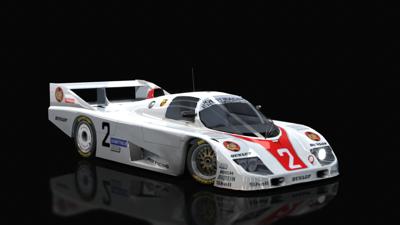
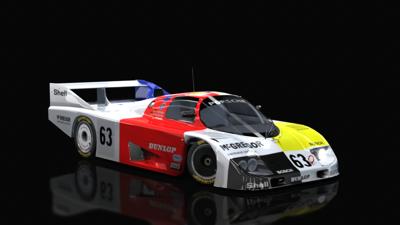
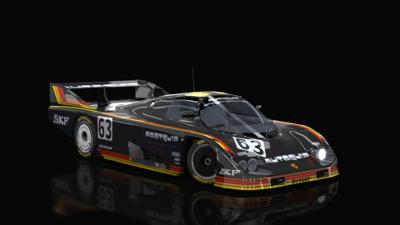
New physics changes and balancing by VAC 2023 (v1.2)
Engine: Porsche 935 F6 2100 cc Twin-Turbo
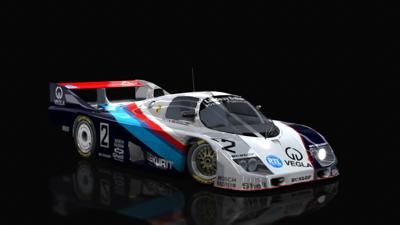
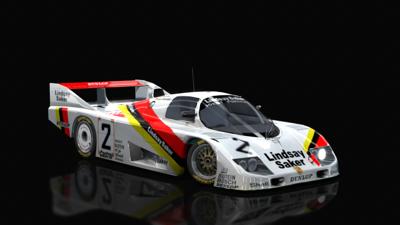
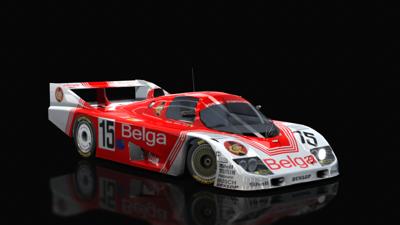
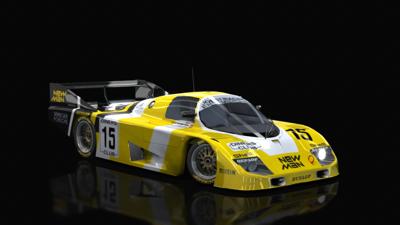
The Porsche 936CJ was a Group C car developed by the Reihold Joest team on the basis of the old Porsche 936 that ran in the Group 6 the previous year. The 936C retained the tubular chassis, exactly like the CK5 cars which were the Group C 936 versions of the Kremer brothers in the same period. The bodywork was built by Zimmermann Design and the engine was originally a 2100cc twin-turbo 6-cylinder with approximately 560 horsepower on maximum boost. It was enlarged eventually to 2650 cc after 1983. The car, although outdated compared to the new Porsche 956 expressly created for Group C, nevertheless proved to be rather valid, taking fourth place at the 1982 Le Mans 24 Hours. It continued running until 1986.
The reason for 936C was that the successor Porsche 956 was introduced in 1982. At the inaugural year of the new Group C formula which the 956 was built for in 1982, privateer teams such as Kremer Racing and Joest Racing had to wait until 1983 for their 956. Thus, in an attempt to conform to the new Group C regulations, both teams built new bodyshapes that incorporated a roof onto their 936-replicas. Joest's car was designated as 936C JR005 while Kremer's car became known as the CK5 01.
16.5.1982 Pace 6 Hours, a round of The FIA World Endurance Championship for Manufacturers
#4 Belga Team Joest Racing (D)
Driven by: Bob Wollek (F)/Jean-Michel Martin (B)/Philippe Martin (B)
Result: 3rd
Grid: 7th (1:21.230)
20.6.1982 24 Heures du Mans
#4 Belga Team - Joest Racing (D)
Driven by: Bob Wollek (F)/Jean-Michel Martin (B)/Philippe Martin (B)
Result: did not finish (Piston)
Grid: 3rd (3:30.670)
1.6.1986 24 Heures du Mans
#63 Ernst Schuster (D)
Driven by: Siegfried Brunn (D)/Ernst Schuster (D)/Rudi Seher (D)
Result: 6th
Grid: 21st (3:37.420)
More racing of 936C here: https://www.racingsportscars.com/type/photo/Porsche/936C.html


