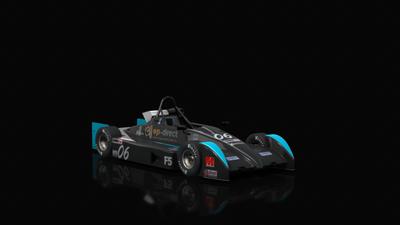
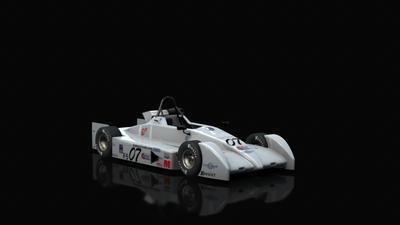
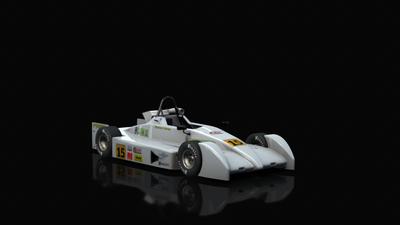
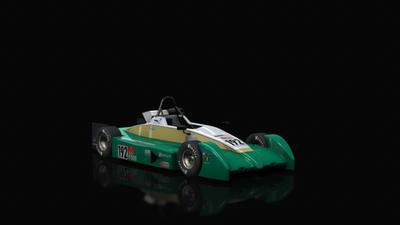
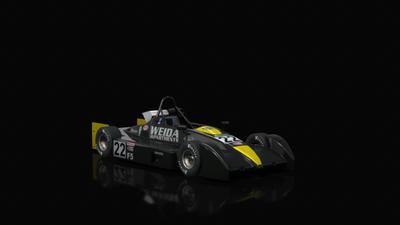
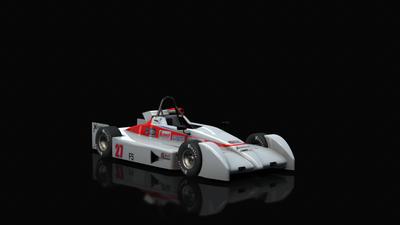
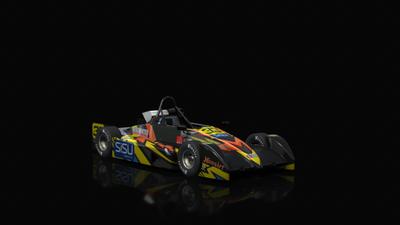
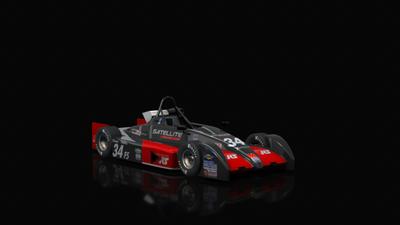
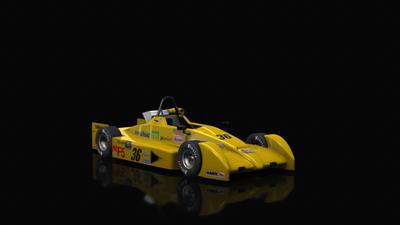
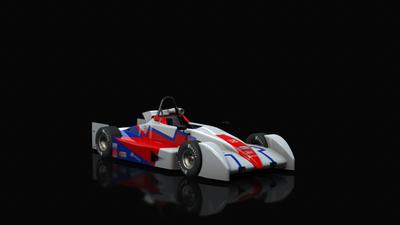
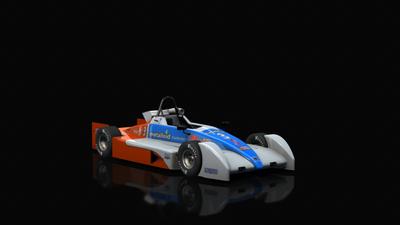
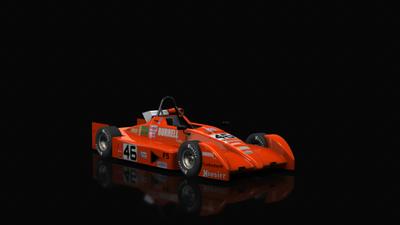
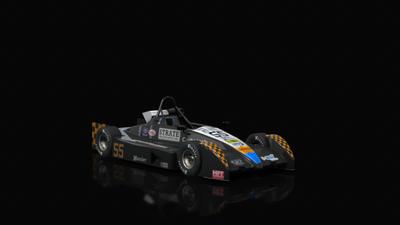
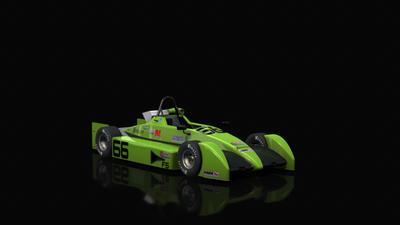
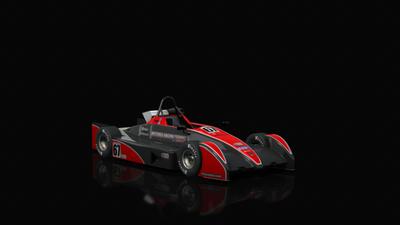
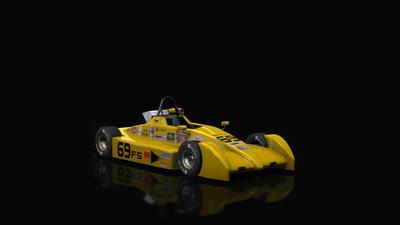
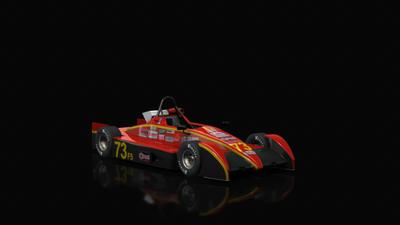
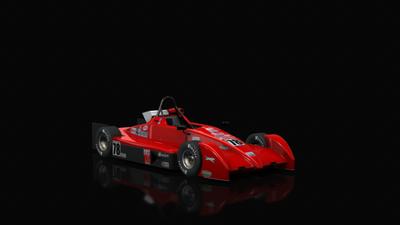
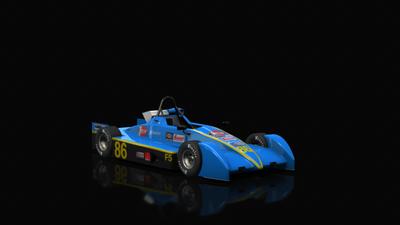
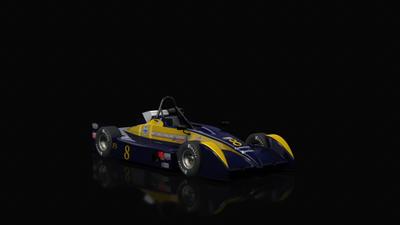
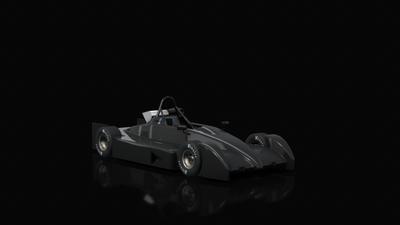
The Scorpion is one of the last Formula 500 chassis currently being made, but the roots of its design are among the oldest still racing. The rights have changed hands several times over the years; it is currently supported by Mitchell Racing Services, who produce a modernized version with a semi-closed, sportscar-style nose and carbon fiber bodywork. Due to the longevity and popularity of the type, Scorpions with both motorcycle and snowmobile drivetrains challenge for national race wins in SCCA competition. This one has a 600cc Suzuki GSX-R 600 powerplant.
Formula 500 is a low-cost open-wheel category, using small, lightweight chassis with mini-sprint-style solid rear axles and extremely limited aerodynamic aids. The most unusual cost-saving feature of the class is its suspension, which utilizes simple rubber "pucks" for springing and the friction of suspension bellcranks rotating against the chassis for damping. Originally concieved around two-stroke snowmobile drivetrains, most cars campaigned nationally now use lightly modified sport bike motors. The power output of all engine options are balanced with restrictor plates, though, and a number of drivers remain competitive using 2-stroke Rotax 593 engines. On most tracks, either drivetrain can achieve lap times comparable to Formula Ford or F4 cars at a half the cost. Older cars with less-powerful 500cc Rotax engines, or with crash structures that no longer meet the safety regulations for road racing, are becoming increasingly popular autocross cars in the F Modified category, where their light weight, narrow track, and CVT transmissions make them ideal.
Formula 500 is a low-cost open-wheel category, using small, lightweight chassis with mini-sprint-style solid rear axles and extremely limited aerodynamic aids. The most unusual cost-saving feature of the class is its suspension, which utilizes simple rubber "pucks" for springing and the friction of suspension bellcranks rotating against the chassis for damping. Originally concieved around two-stroke snowmobile drivetrains, most cars campaigned nationally now use lightly modified sport bike motors. The power output of all engine options are balanced with restrictor plates, though, and a number of drivers remain competitive using 2-stroke Rotax 593 engines. On most tracks, either drivetrain can achieve lap times comparable to Formula Ford or F4 cars at a half the cost. Older cars with less-powerful 500cc Rotax engines, or with crash structures that no longer meet the safety regulations for road racing, are becoming increasingly popular autocross cars in the F Modified category, where their light weight, narrow track, and CVT transmissions make them ideal.


