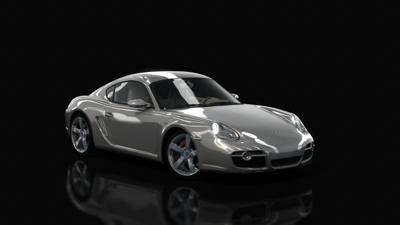
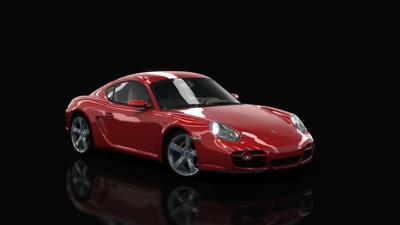
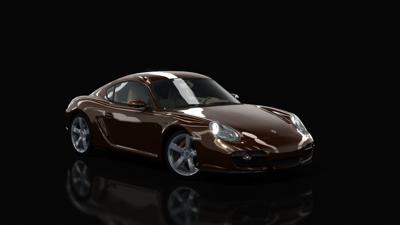
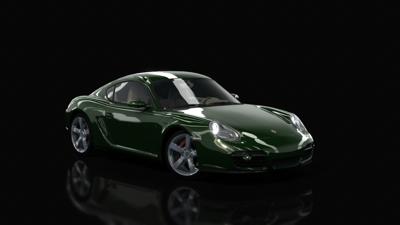
v1.1 by ACTK
Add LODs
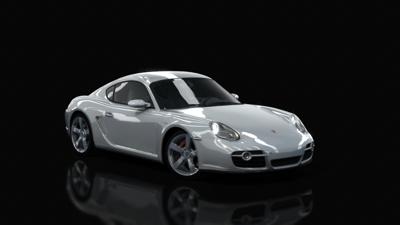
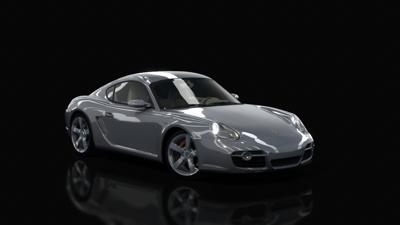
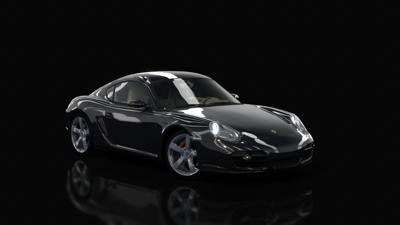
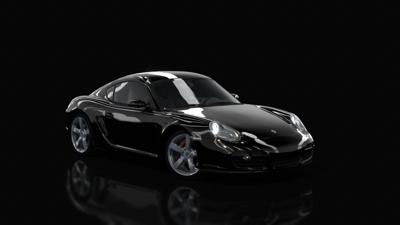
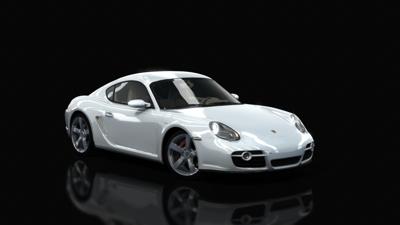
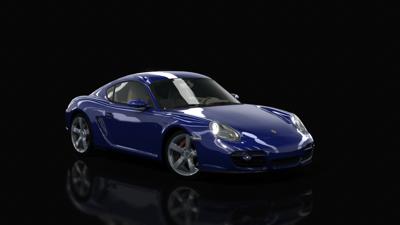
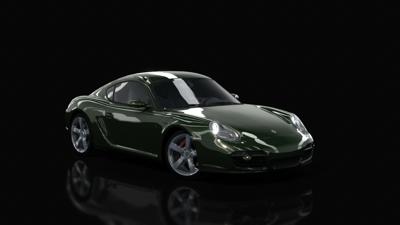
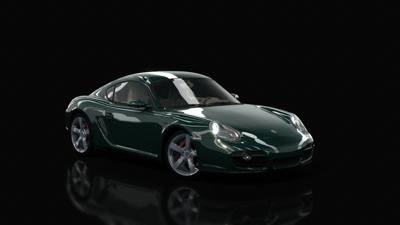
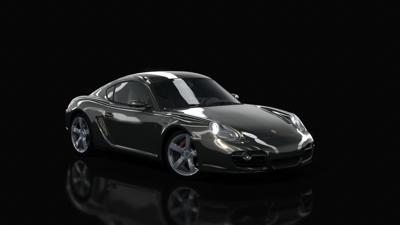
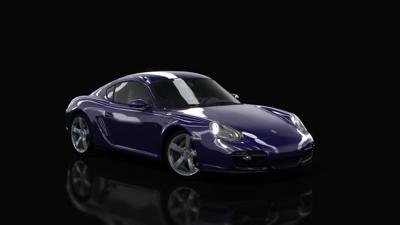
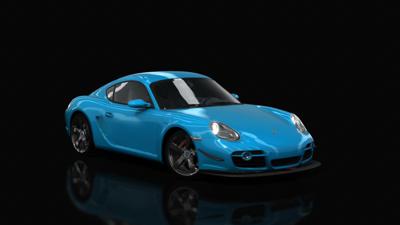
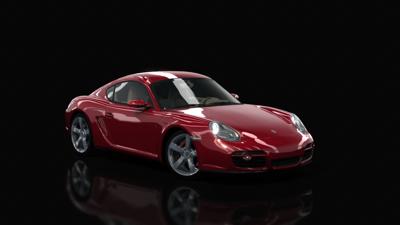
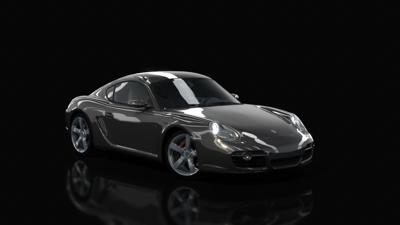
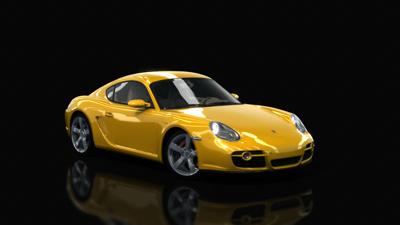
After two years of development, the first model of the fastback coupé to be released was the Cayman S (type 987120). Photographs and technical details were released in May 2005, but the public unveiling took place at the September Frankfurt Motor Show. The S suffix (for Sport or Special) indicated that this was a higher performance version of a then unreleased normal model. That model, the Cayman (987110), went on sale in July 2006. A motorsport-tuned model, the Cayman RS, was rumored to have been tested at the Nürburgring that same year.
The Cayman fastback coupé (project 987c) and the second generation Boxster roadster (project 987) shared the same mid-engined platform and many components, including the front fenders and trunk lid, doors, headlights, taillights, and forward portion of the interior. The design of the Cayman's body incorporates styling cues from classic Porsches; 356/1, the 550 Coupé and the 904 Coupé.
Unlike the Boxster, the Cayman has a hatchback for access to luggage areas on top of and in the back of the engine cover. The entire aft portion of the Cayman is made from stainless steel. The suspension design is fundamentally the same as that of the Boxster with revised settings due to the stiffer chassis with the car's fixed roof.
The 3.4-litre flat-6 boxer engine (M97.21) in the first generation Cayman S was derived from the 3.2-litre (M96.26) that was used in the Boxster S, with cylinder heads from the Porsche 997 S's 3.8-litre motor (M97.01), which have the VarioCam Plus inlet valve timing and lift system. A less powerful but more fuel efficient version, the 2.7-litre M97.20, powered the base model. The use of these engines exclusively in Caymans ended in MY 2007 when Porsche upgraded the Boxster (987310) and Boxster S (987320).
A 5-speed manual transaxle is standard on the Cayman (G87.01), while a 6-speed manual (Getrag 466) is the default for the S (G87.21) and an option on the base (A87.20). An electronically controlled 5-speed automatic transaxle (Tiptronic) was also available on the S (A87.21) and the non-S version (A87.02) (The 2009 models replaced this option with a seven-speed "PDK", Porsche's dual-clutch robotic manual transmission). Other options include active shock absorbers (ThyssenKrupp Bilstein GmbH's DampTronic, rebadged as PASM by Porsche), ceramic disc brakes (PCCB), xenon headlights (Hella's Bi-Xenon) and an electronically controlled sport mode (Sport Chrono Package).
The first generation Cayman ceased production in November 2011.


