v1.5 by ACTK
Add LODs
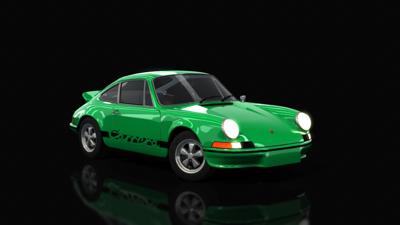
*Old Porsche 911 was famous for its rear-end pronounced aerodynamic lift that, together with a very low rear camber recovery due by the new semi-trailing arm suspensions, made this car quite tail happy. Moreover from the 911 S the front lift was reduced further. To improve this unstability, especially at higher speeds, the 911 RS adopted a Ducktail rear spoiler that reduced the rear lift by 75 %. Despite these precautions and a 40 % LSD, the RS was quite difficult to handle in curves but when mastered it offered a real fast and funny ride with an optimum balance between lift off throttle oversteer and rear weight bias understeer. To improve the stability, an 80 % LSD was available as optional.*
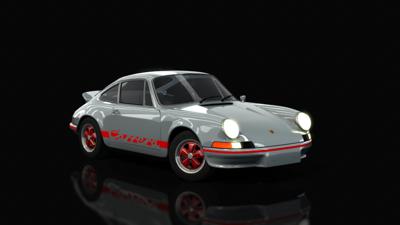
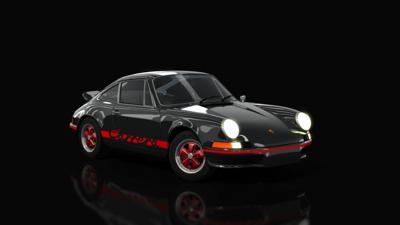
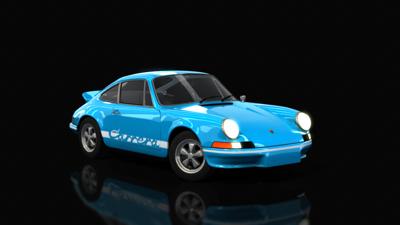
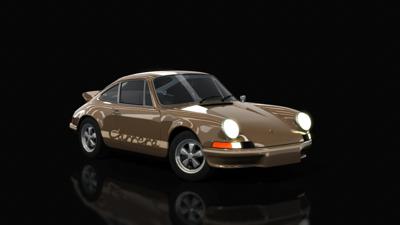
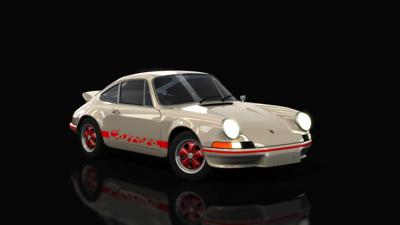
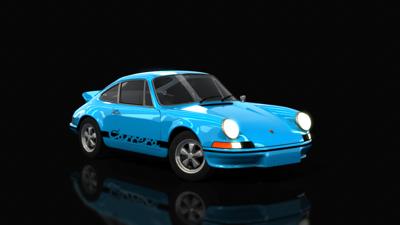
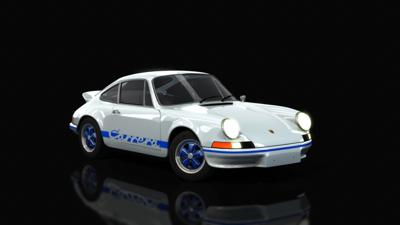
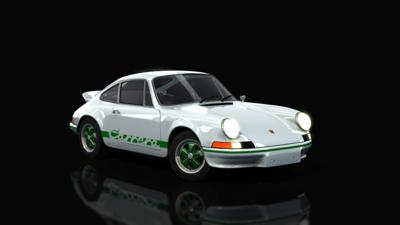
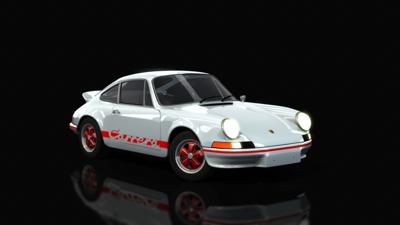
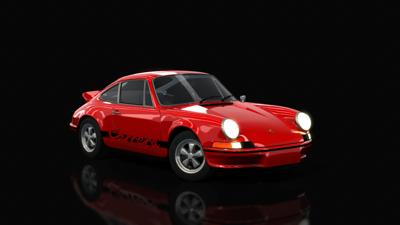
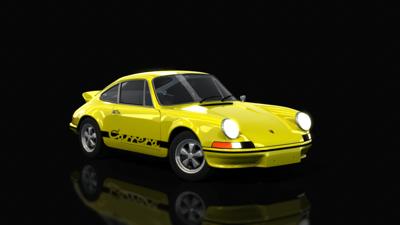
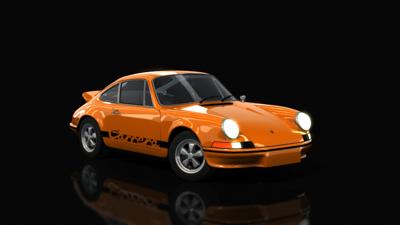
Revealed at the 1972 Paris Auto Show, the Carrera 2.7 RS was a special model used to homologate the 911 in Group 4 racing. Developed from the 911S, the 2.7 was more potent in almost every area. Compared to the standard Carrera, the 2.7 RS featured a larger engine, wider flares to accommodate the Fuchs alloy wheels, stiffened suspension, larger brakes and a ducktail rear spoiler. With the use of a Nikasil coating on the cylinder walls, the 2.4 unit could be bored out to a capacity of 2687 cc, but the standard valve train was retained. At the time, this became the largest engine available on a Porsche and was good for 210bhp at 6300rpm. And with a taller 4th and 5th gear, the top speed was increased to 152mph. Initial production for the 2.7 was only 500 cars and it sold out almost immediately. Three versions were available, including a lightweight Sports trim, Race Trim or more opulent Touring trim for the road. The lightweight version was substantially lighter with thin-gauge body panels, lighter windows and a stripped out interior. Production began in April of 1972 and finished in July of the same year with 1580 total cars. Around 1300 of these were the standard Touring model.


