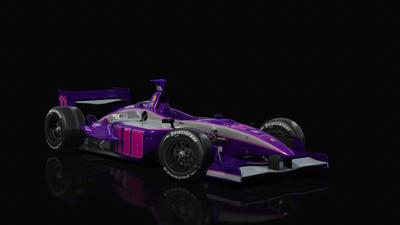
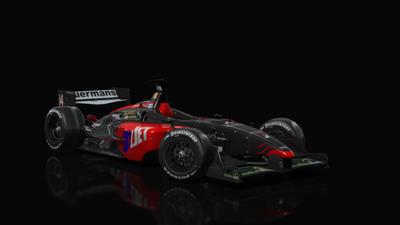
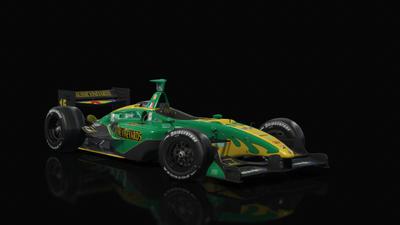

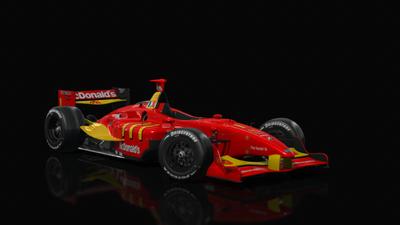
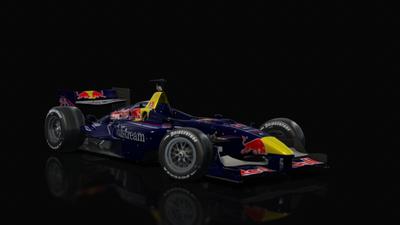
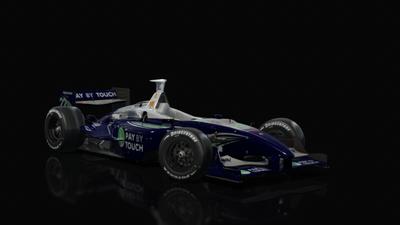
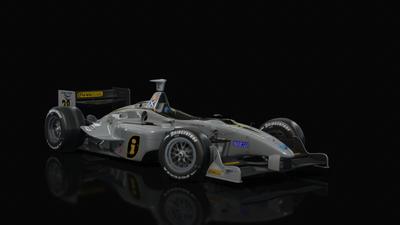
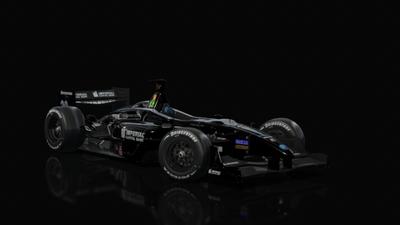
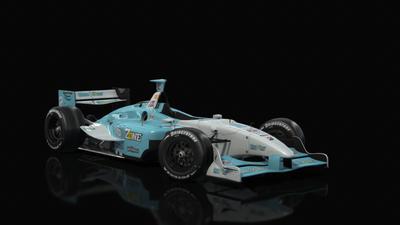
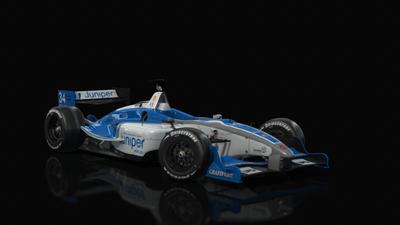
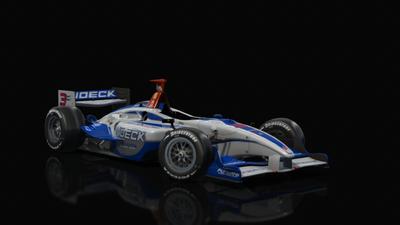
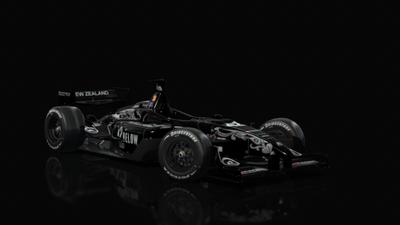
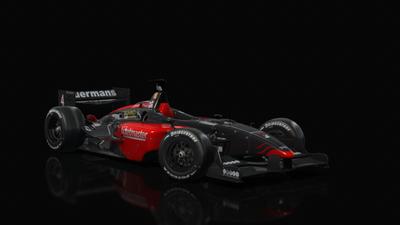
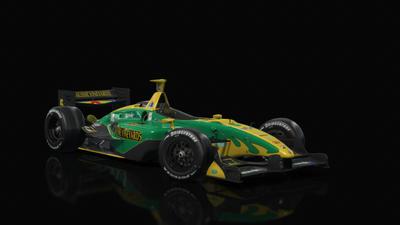
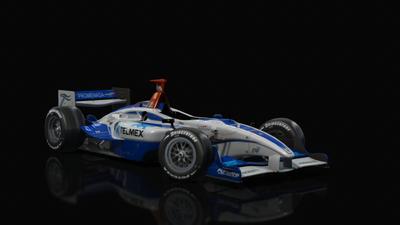
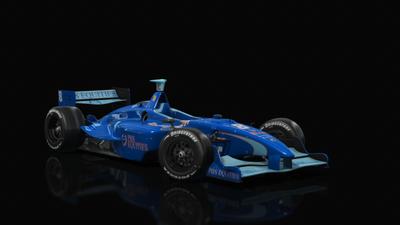
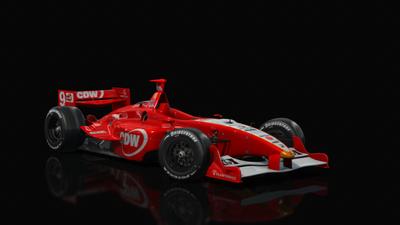
History often remembers the Panoz DP01 not for its performance, which was formidable, but for its tragic timing as the final standard-bearer of a dying empire. Commissioned by the Champ Car World Series to replace the aging Lola fleet, this chassis was intended to be the savior of the sport, a cost-effective, purpose-built machine designed to improve overtaking and level the playing field for the 2007 season. It represented a bold new direction for American open-wheel racing, moving away from the expensive development wars of the past toward a "spec" formula that prioritized driver skill over engineering budget. Tragically, it would dance for only a single season; the unification of Champ Car and the Indy Racing League in early 2008 rendered the DP01 obsolete almost immediately after it had proven its worth, making it one of the shortest-lived premier racing cars in history.
The engineering philosophy behind the DP01 was a departure from the brute-force nature of the previous generation. While it retained the thunderous 2.65-liter turbocharged Cosworth XFE V8—a methanol-burning monster producing roughly 750 horsepower—the chassis itself was significantly smaller, lighter, and more agile than the Lola B02/00 it replaced. Built by Élan Motorsport Technologies, it featured an advanced underbody aerodynamic package with massive Venturi tunnels. These tunnels generated immense downforce from the ground effect, allowing the car to follow closely in dirty air without washing out, a critical design choice meant to encourage wheel-to-wheel battles on the narrow street circuits that defined the series.
For the drivers, the cockpit represented a shift into the modern digital age. The DP01 was the first Champ Car to utilize a paddle-shift transmission system, a 7-speed sequential unit that replaced the traditional stick shift. This change was controversial among purists who loved the physical challenge of the manual lever, but it allowed for faster lap times and reduced driver fatigue. Perhaps the most pragmatic innovation was the inclusion of an on-board starter. In previous years, a spin meant waiting for a safety crew to restart the engine, causing full-course caution periods that ruined the flow of the race. The DP01 allowed drivers to stall, restart the car themselves, and continue, keeping the action green and the pace frantic.
The car's legacy is tied inextricably to the 2008 Toyota Grand Prix of Long Beach. Due to contractual obligations during the chaotic merger, the Champ Car teams ran one final race with the DP01 chassis while the IndyCar teams raced elsewhere. That event served as a Viking funeral for the machine, a final display of its speed and agility before it was relegated to museums and private track-day collections. It remains a beloved "what if" in motorsport folklore—a brilliant, nimble, fire-breathing racer that was killed not by a lack of speed, but by the stroke of a pen in a boardroom.


