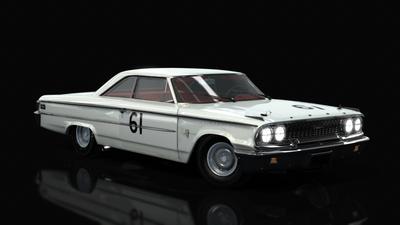
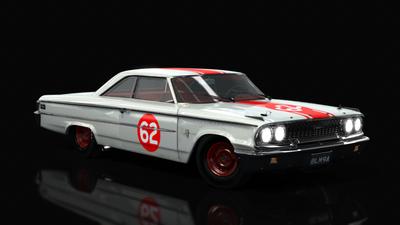
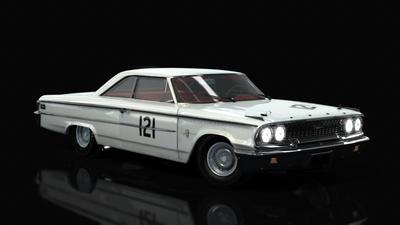
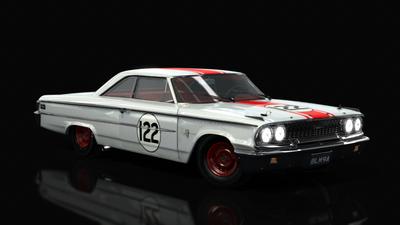


v1.1.1 by ACTK
Fix ambient_shadows.ini
Add new LODs
Add data to data.acd
Add main_geometry.vao-patch
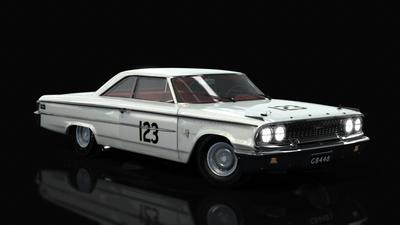
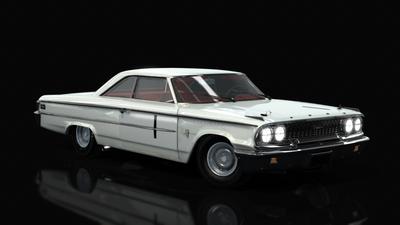
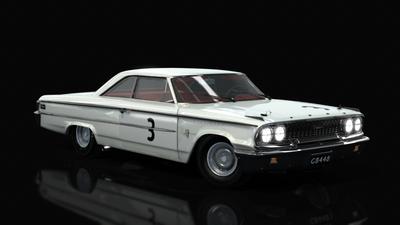
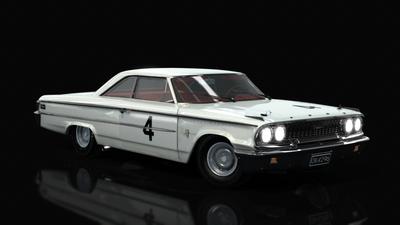
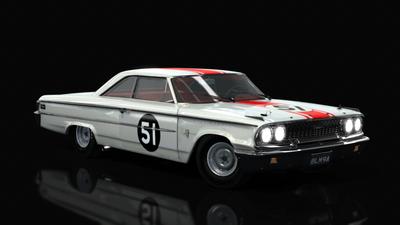
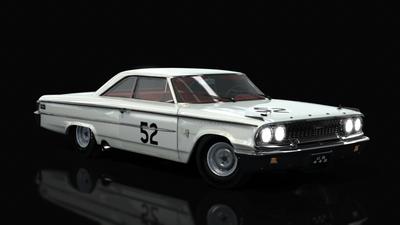
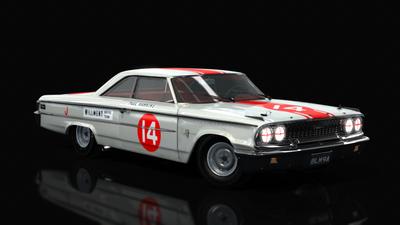
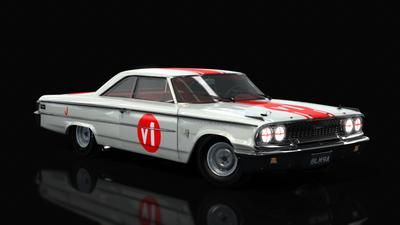
All of the production Galaxie Lightweights were Corinthian White with a red interior. Because the Blue Oval found itself at a disadvantage compared to GM and Mopar insofar as weight was concerned, Ford put the Galaxie on a diet, shedding almost 425 pounds compared to a fully equipped Galaxie 500 XL hardtop. This was accomplished by using fiberglass for the hood, front fenders, decklid, and inner fender liners. Further weight was shaved through the use of aluminum front and rear bumpers, aluminum bumper brackets, and a lightweight frame. To date, much misinformation has been published on the lightweight frame, which was clarified further by Kolodziej, who says, "The frame assembly is comparable in function and appearance to C3AA-5005-AA, a production frame assembly, except frame side rails are to be at minimum material tolerance."
Other exterior modifications included the deletion of the hood springs and the trunk's counterbalancing spring. The trunk mat, spare tire, and jack were jettisoned. Kolodziej notes that in 1963, the battery remained under the hood. But it would not have been unusual for those campaigning the cars in period to move it to the trunk, where it was factory-installed on the 1964 Galaxie Lightweights.
Because entertainment and comfort were not a priority for trips of only 1,320 feet, an AM radio was not installed. One horn, the clock (standard on the Galaxie 500), heater, defroster, and door panel armrests were deleted. The front bench seat usually found in a Galaxie 500 was replaced with a pair of lightweight bucket seats from Bostrom. Carpets were replaced with thin polyethylene flooring. No sound deadener or seam sealer was installed on any of the 200 cars built.
The price for all this high-powered, lightweight goodness was $1,414.15 ($11,500 in today's dollars) on top of the base price of $2,783 ($22,150 today) for an unoptioned Galaxie 500 two-door hardtop. And you got a credit of $75.10 from Ford to delete the heater components.
Just how fast was a 1963 Galaxie Lightweight? In 1963, two magazines put the Galaxie Lightweights under the stopwatch. Hot Rod's Ray Brock noted that the car belonging to Les Ritchey (John's uncle), an early car that lacked the fiberglass doors and inner liners and so weighed in at 3,510 pounds, reeled off a 12.29 run at a speed of 117.30 mph. Its sister car, driven by Gas Ronda, with fiberglass doors and inner liners and weighing 3,425 pounds, ran the quarter in 12.07 at 118 mph, illustrating what shaving just 85 pounds could yield.
Popular Hot Rodding took Les Ritchey's Winternationals car to Pomona and logged a 12.49-second run at 116.27 mph. To put this in perspective, remember this was 1963.


