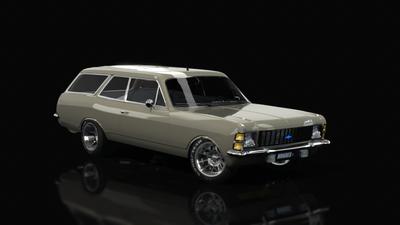
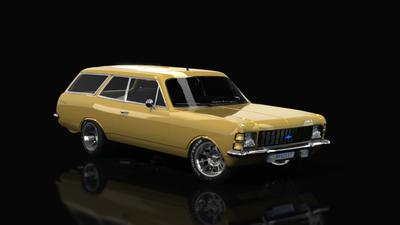
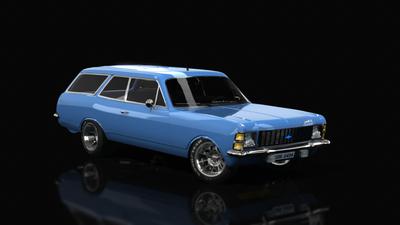
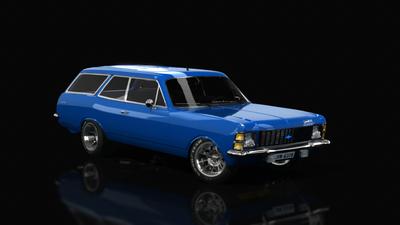
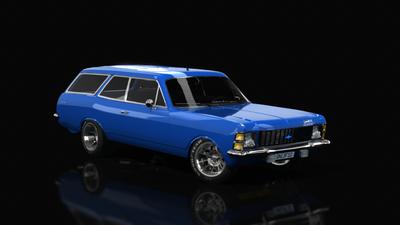
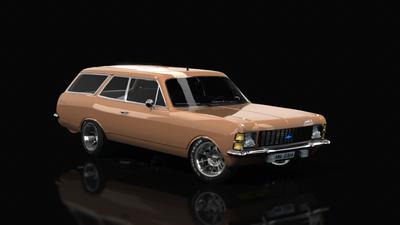
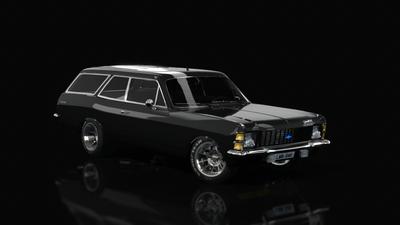
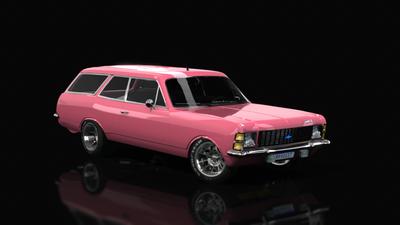
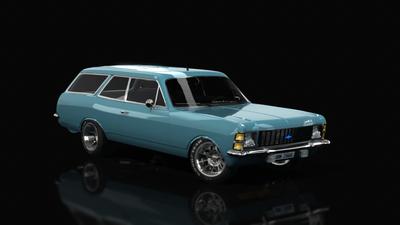
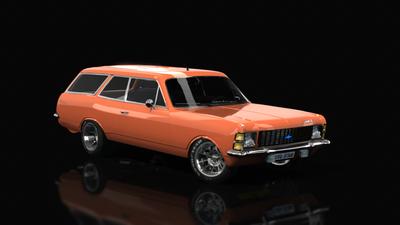
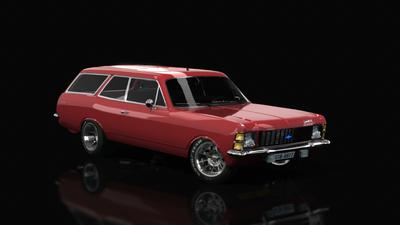
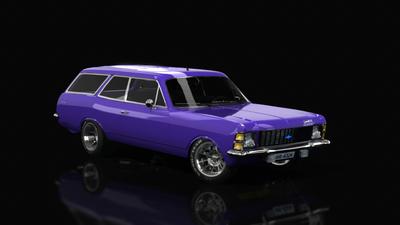
Credit for Re-design/re-worked/Tuned: Mrn Desings.
EMISSIVE_LIGHTS
Main_headlights
EXTRA_A
EMISSIVE_LIGHTS
Bumper_foglights
EXTRA_B
ANIMATION_1
Front_Hood
EXTRA_E
Based on the Chevrolet Opala, the Caravan also became one of the great successes of General Motors Corporation . In Europe, the station wagon was manufactured by the German Opel as the Rekord Caravan, in two- and four-door versions.
The year was 1966 when the first units began to be delivered to owners. Called the Rekord C , both the sedan (two and four doors) and station wagon configurations replaced the 1965 B model with its 1.9-liter four-cylinder engine, later used in the Opel GT sports car.
In fact, the C series is very popular in Brazil. Here, the Opala was launched by General Motors in 1968, during a presentation made at the 6th São Paulo Auto Show.
It was so successful that in its first few years, the car was already the newest Brazilian dream car . By the end of its production in 1992, more than a million units had been sold.
The durability of its mechanical components, comfort and unmistakable, elegant bodywork have made the Opala line one of the most sought-after vehicles to this day.
Advertisement for the Opala and Caravan duo, the most sophisticated models that GM could offer in Brazil
Disclosure
Advertisement for the Opala and Caravan duo, the most sophisticated models that GM could offer in Brazil
In 1975, the biggest revolution in the Opala/Caravan line came to coincide with GM's 50th anniversary . The new line received a new front and rear, with a more updated style, a hood with accentuated creases, turn signals now located at the ends of the front fenders, a new grille, and double round taillights, similar in style to those of the Corvette sports car.
Along with the Opala , its station wagon variant also debuted in the 1975 line. Called Caravan , the station wagon only had the option of three doors unlike the Opel Rekord Caravan , in addition to four and six-cylinder engines.
Like the Opala , the Caravan was identical to its Opel Rekord precursors, with the exception of the four doors on the latter, of course. Bumpers, grille and trims were also different.
The Chevrolet Caravan , like the Opala, was offered in two versions, the 2.5-liter and the 4.1-liter, Standard and Comodoro, respectively.
On the outside, the design was quite harmonious. At the back, the taillights were the same as the Opala and the license plate was positioned on the bumper, creating a cleaner line on the rear lid.
Credit for Re-design/re-worked/Tuned: Mrn Desings.


