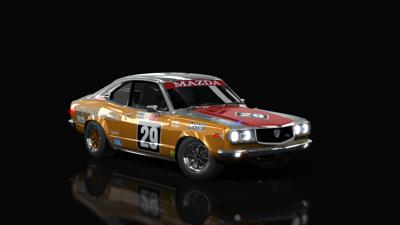
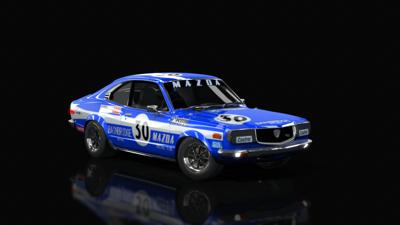
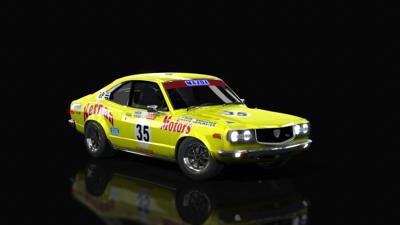
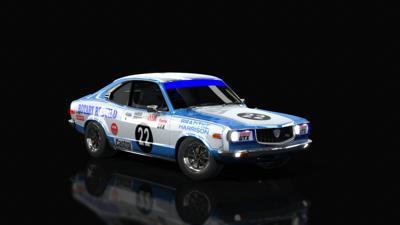
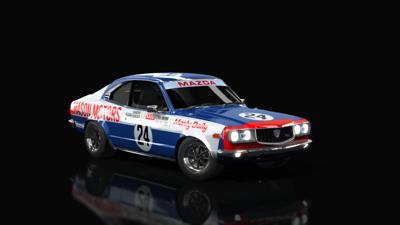
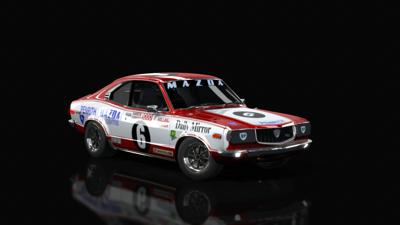
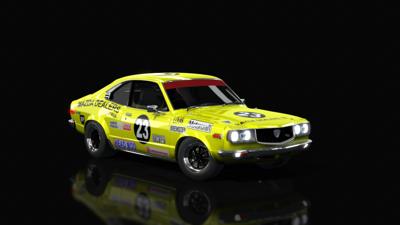
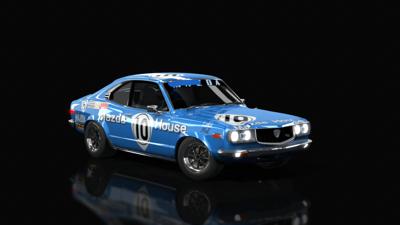
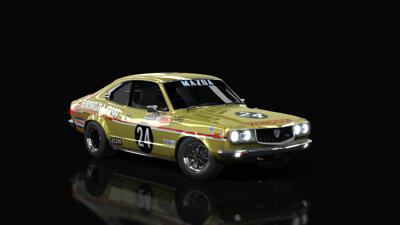
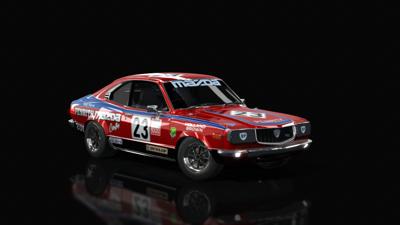
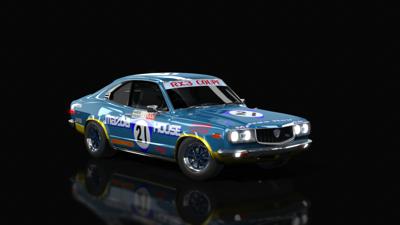
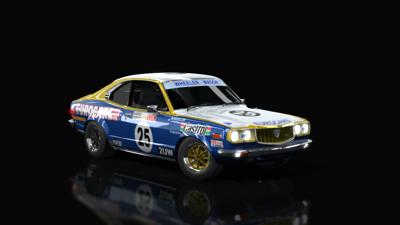
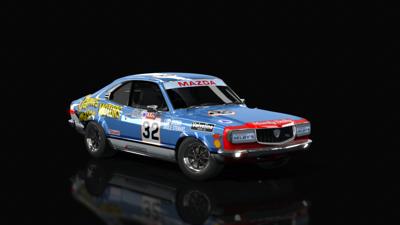
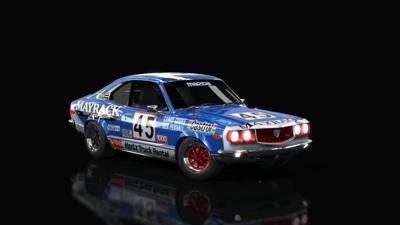
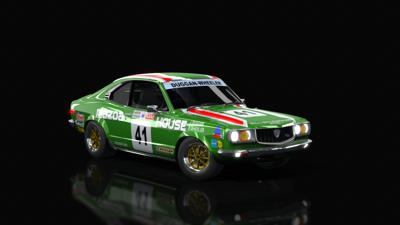
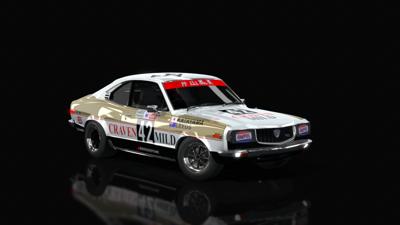
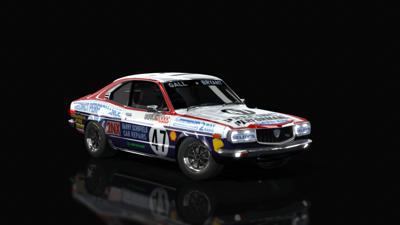
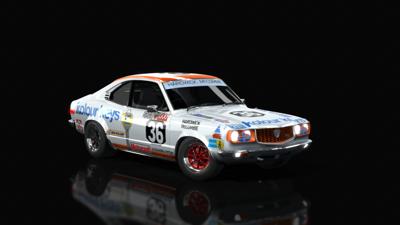
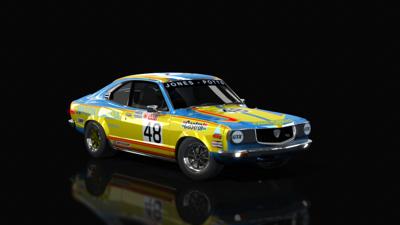
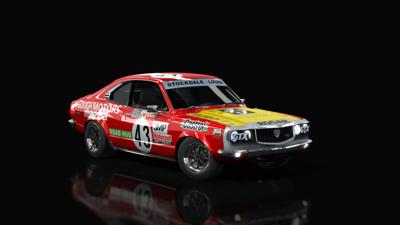
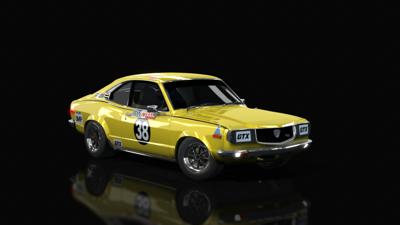
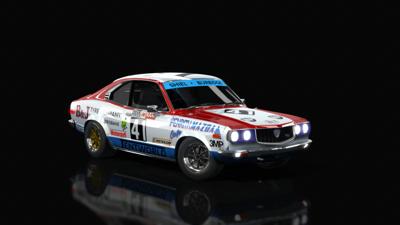
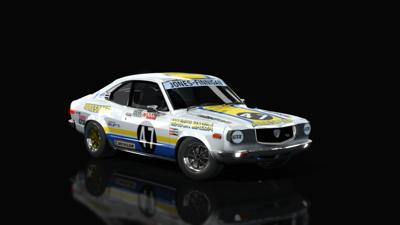
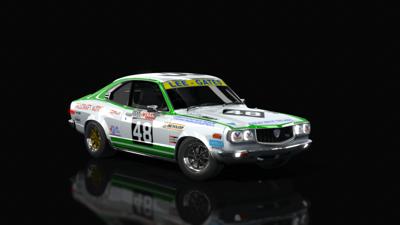
v1.1 by ACTK
Add LODs
Add data to data.acd
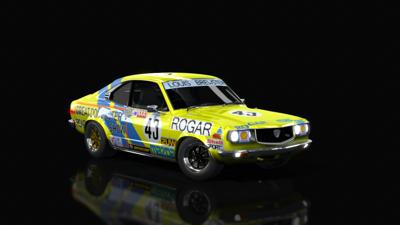
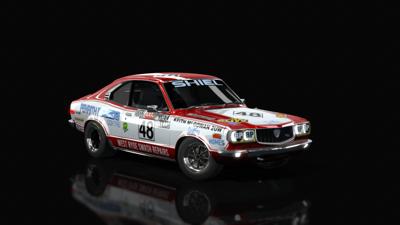
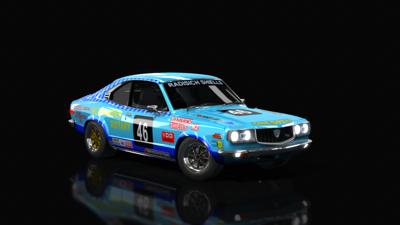
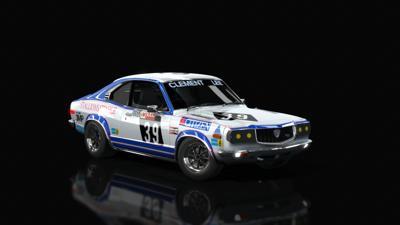
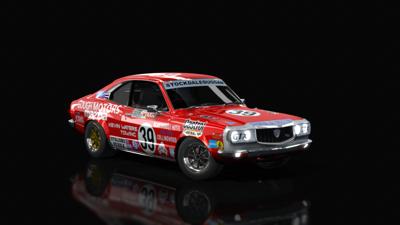
The RX-3 appeared in dealer showrooms in September 1971 and was made in two series. Series I (1971-1973).
The Series II version was introduced in the second half of 1973.
With the factory choosing to spend its resources on gearing up for emissions legislation, Mazda's racing efforts in the first half of the 1970s were limited to a handful of privateer efforts.Technical assistance would still be provided, however, and the company would keep developing their engines for competition use. A 10A-powered RX-3 took a late 1971 victory, and Mazda's reputation was raised immeasurably with a pole position and a 1-2-3 at the Japanese Grand Prix, held in May 1972. The race engines were rated at 260hp, thanks to a 48mm twin-choke Weber carb and a set of side-intake auxiliary bridge ports, which extended into the trochoid housing.


