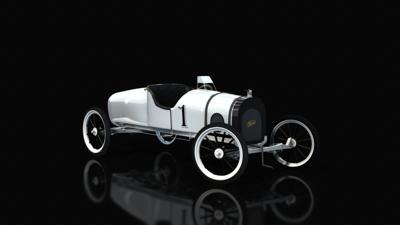
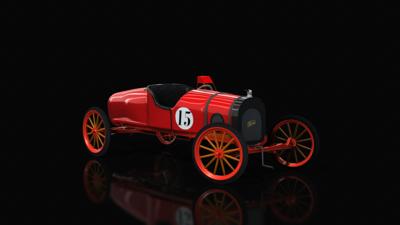
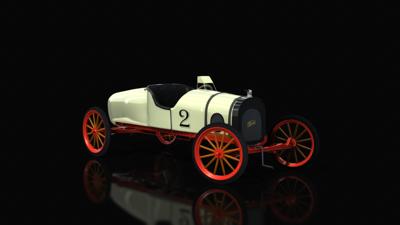
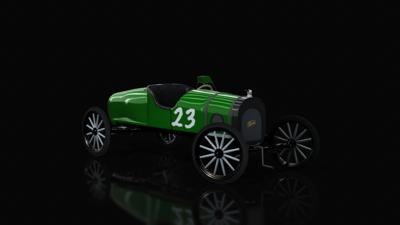
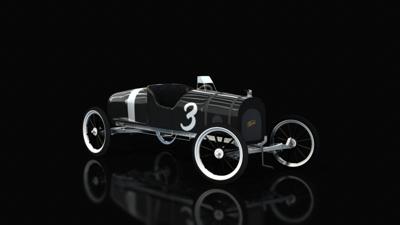
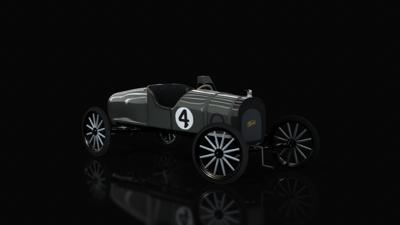
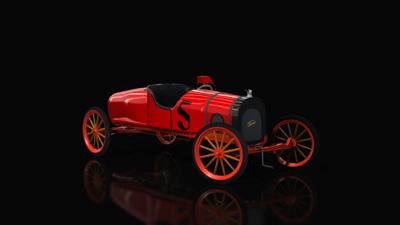
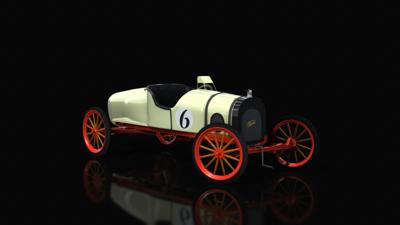
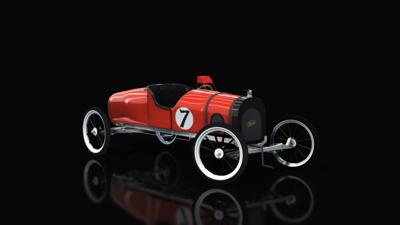
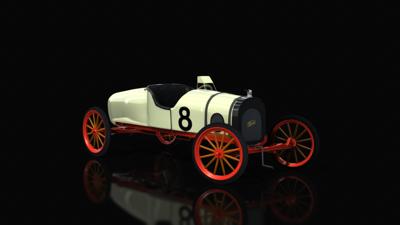
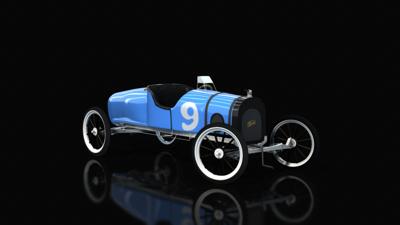
With the advent of the Ford Model T suddenly the market was flooded with affordable automobiles that could be tweaked, modified and adapted to just about any imaginable job. This birthed the local short track scene in the United States as pioneering auto mechanics, tinkerers, and hopeful local racers began to modify their Model Ts for the racetrack. Model T owners were shedding weight by tossing away heavy factory steel fenders and bodywork and replacing them with lightweight and simplified speedster bodies. As the T evolved, so did the concept of the speedster. Early examples were simply cut down roadsters, while later examples got custom bodies designed to cheat the air and ditch the pounds.
Usually the chassis was lowered four inches, called “underslinging”, the wheelbase slightly extended, and the basic 20 HP motor “hopped up” with a Roof or RAJO Overhead Valve Conversion (OHV), a hot cam, balanced crankshaft with pressure oiling, and side-draft or up-draft carburettors. the stock body was replaced with a sharp looking “Speedster Body” complete with a monocle windshield, and the heavy wooden wheels were replaced with strong and lightweight wire wheels. Some cars retained standard Ford wings and some did away with them altogether. A complete kit of radiator, hood, floorboards, rear gasoline tank, and body could be purchased for around $100. The Speedster body wasn't just for looks; it made the Model T go faster by making it lighter, cutting down the frontal area, and streamlining it. Just making these changes could add 10 to 15 miles an hour to the top speed.
Usually the chassis was lowered four inches, called “underslinging”, the wheelbase slightly extended, and the basic 20 HP motor “hopped up” with a Roof or RAJO Overhead Valve Conversion (OHV), a hot cam, balanced crankshaft with pressure oiling, and side-draft or up-draft carburettors. the stock body was replaced with a sharp looking “Speedster Body” complete with a monocle windshield, and the heavy wooden wheels were replaced with strong and lightweight wire wheels. Some cars retained standard Ford wings and some did away with them altogether. A complete kit of radiator, hood, floorboards, rear gasoline tank, and body could be purchased for around $100. The Speedster body wasn't just for looks; it made the Model T go faster by making it lighter, cutting down the frontal area, and streamlining it. Just making these changes could add 10 to 15 miles an hour to the top speed.


